
L+ LAB / VOICES · Essay
What Anthropic’s Claude Reveals About the Future of Management
When every employee begins managing agents, organizations need to rethink judgment, accountability, and coordination.
AI doesn't eliminate management. It redistributes it.
Anthropic just published a fascinating look at how work is changing inside one of the world's most AI-native companies.
By August 2026, employee-directed AI agents were running for roughly six times as many hours as their human counterparts worked.
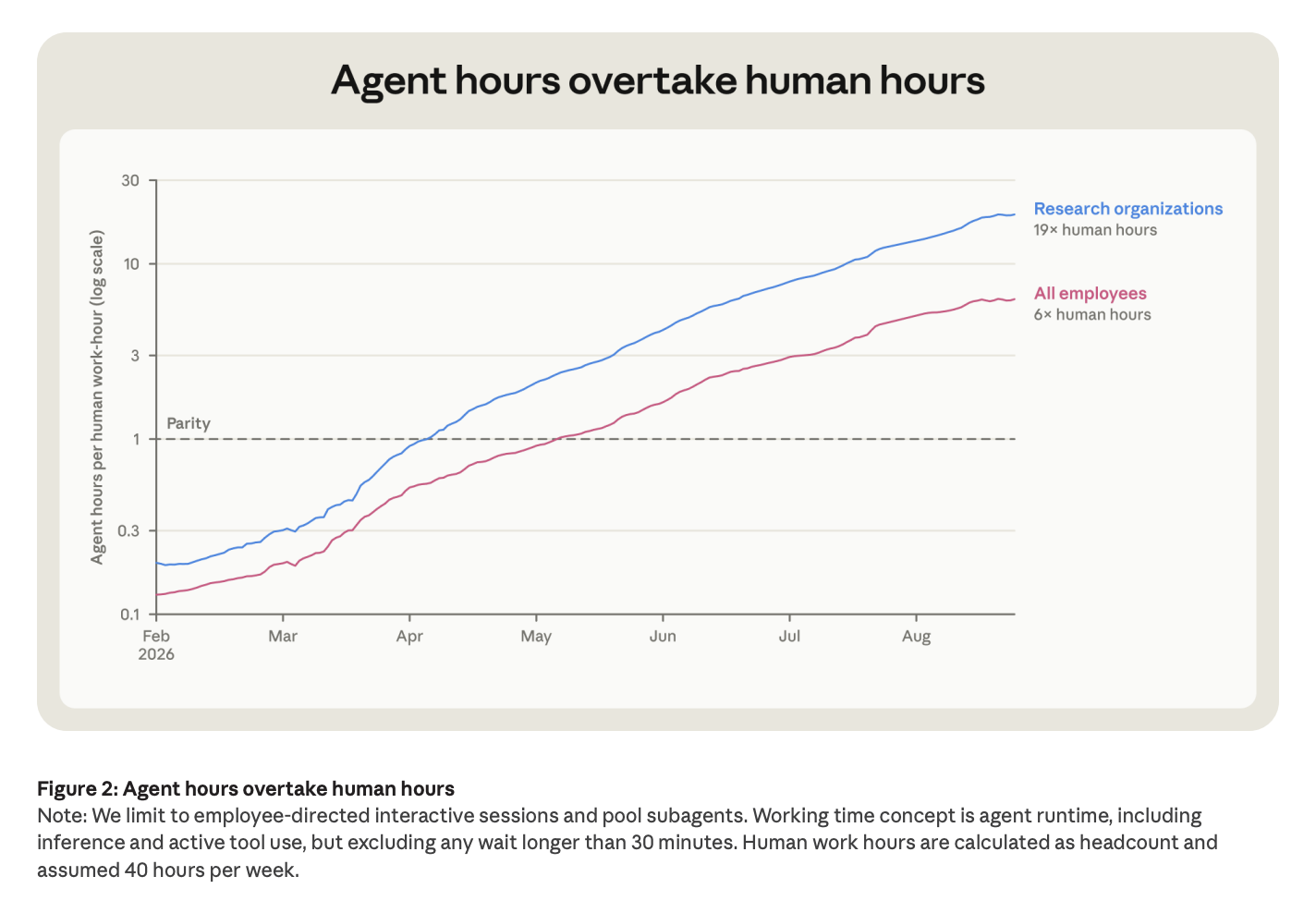
Figure 1. Agent hours overtake human hours. Source: Anthropic Institute.
But the more interesting finding isn't how much work Claude can perform. It's how human work is being redefined.
Anthropic found that the share of Claude interactions devoted to what it calls meta-work—planning, monitoring, evaluating, and orchestrating agents—rose from 10% to 22%. The real shift is captured in Anthropic's own research: employees are increasingly becoming managers of Claudes.
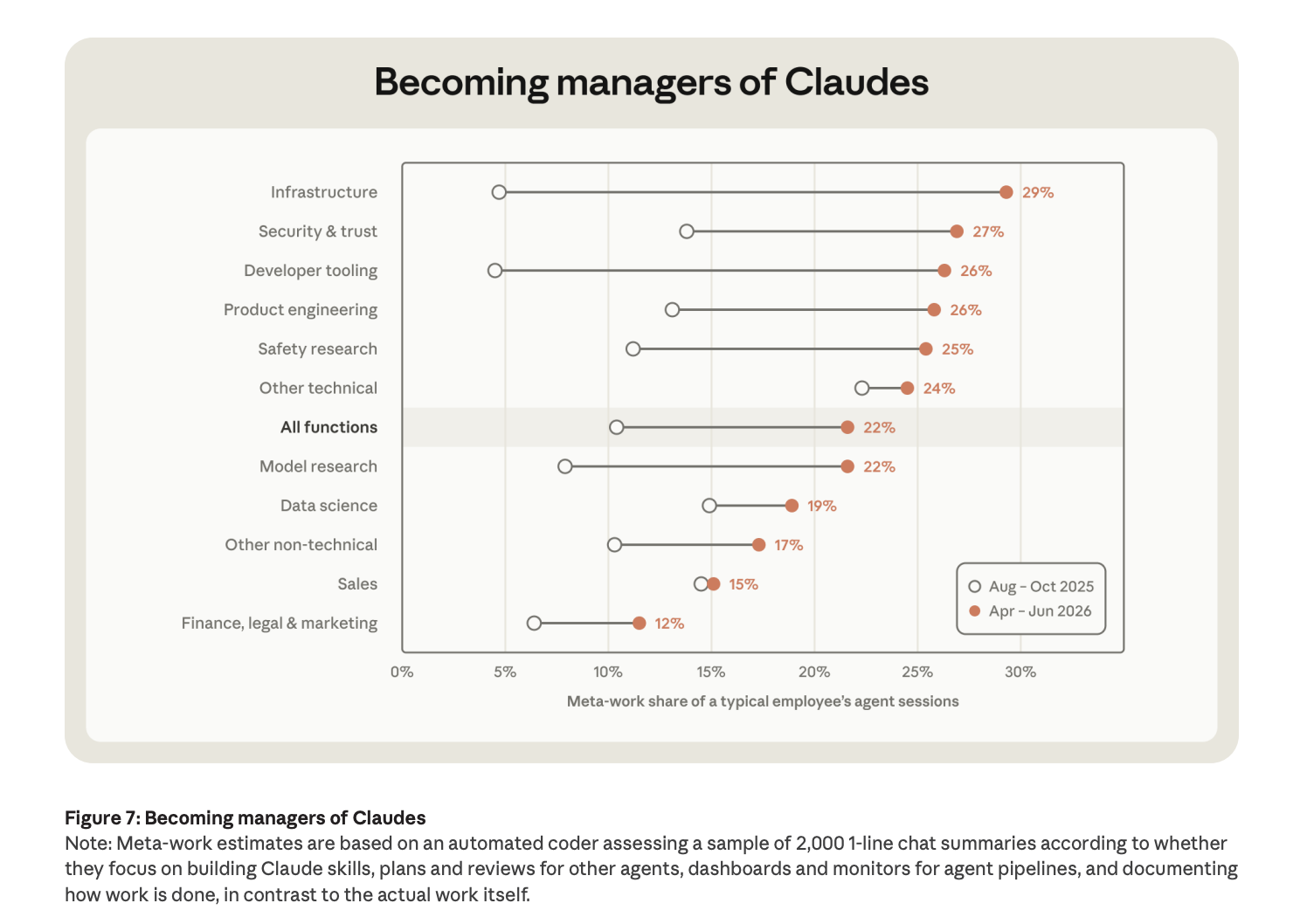
Figure 2. Becoming managers of Claudes. Source: Anthropic Institute.
And despite extensive automation, meeting time among technical individual contributors increased by 16%.
Think about the organizational implications.
An engineer is no longer just writing code. They're directing agents, evaluating outputs, resolving exceptions, and making architectural decisions.
A domain expert is no longer just completing tasks. They're increasingly coordinating an AI-powered production system.
Individual contributors are beginning to operate like managers—without necessarily having management titles.
This challenges a fundamental assumption in organizational design: that execution belongs to individual contributors, while coordination and oversight belong primarily to managers.
AI is blurring that distinction.
But there's a catch.
If every employee becomes a manager of agents, who designs the decision rights, accountability, and coordination mechanisms across the enterprise?
Without that architecture, we may simply replace execution bottlenecks with human attention bottlenecks.
Anthropic is an unusually AI-intensive organization, and its experience isn't a universal prediction. But it offers an early glimpse of a different operating model.
The next generation of AI-native organizations may not be defined by how many people they manage, but by how effectively they organize human judgment and machine execution.
The question for leaders is no longer just how many tasks AI can automate. It's whether our organizations are designed for every employee to lead a team of agents.
Source
Wilmers, N., Catipon, R., Massenkoff, M., & McCrory, P. (2026). How Employment Is Changing at Anthropic. Anthropic Institute.